

DIstributed Smart Communications with Verifiable EneRgy-optimal Yields

DISCOVERY is a coordinated research project conducted by teams from three different Spanish universities (UVigo, UPC, and UC3M) with complementary research skills. The project combines our knowledge in the areas of distributed learning, energy-efficiency, security, data privacy, communication protocols, and advanced services to face improvements in distributed communication protocols and systems with privacy and security protection mechanisms, jointly designed so that the digital carbon footprint (DCF) of the entire system can be characterized, measured, and optimized according to the users’ requirements.
The research goals in DISCOVERY will contribute to the realization of more efficient, secure, and sustainable distributed digital infrastructures currently used for data-driven smart services powered by statistical learning models.

Evaluation of the level of privacy in FL
The aim is to define privacy metrics in FL that establish how much information an active adversary can obtain a priori (before running a given number of interactions of the learning algorithm) and a posteriori (after running that number of interactions). Real-time privacy loss estimation methods will be developed.
Design of secure aggregation techniques in (D)FL to prevent attacks against the aggregator(s) or the learning network computation nodes
Homomorphic encryption, secure multiparty computation and differential privacy techniques will be applied. Much of these techniques provide post-quantum resistance in a natural way, since they are either based on hard problems over lattices, or provide theoretical security under certain assumptions of non-collusion.
Analysis of threat models in FL
The aim is to identify realistic threats in FL environments where active adversaries try to infer as much information as possible during the learning process.
Design of attacks with active adversaries in FL
We intend to design membership inference attacks (to know if a subject belongs to a training group) and property inference attacks (to validate if a record in the database satisfies a property).
Evaluation of the level of privacy in FL
The aim is to define privacy metrics in FL that establish how much information an active adversary can obtain a priori (before running a given number of interactions of the learning algorithm) and a posteriori (after running that number of interactions). Real-time privacy loss estimation methods will be developed.
Design of secure aggregation techniques in (D)FL to prevent attacks against the aggregator(s) or the learning network computation nodes
Homomorphic encryption, secure multiparty computation and differential privacy techniques will be applied. Much of these techniques provide post-quantum resistance in a natural way, since they are either based on hard problems over lattices, or provide theoretical security under certain assumptions of non-collusion.
Design of authentication and accountability algorithms in (D)FL
This involves integrating Blockchain, authentication and direct model sharing technologies into a decentralized learning architecture to ensure traceability of learning processes.
Improving the efficiency and robustness of (D)FL algorithms to deal with adverse situations such as failures, interruption or delay in communications, and statistical inhomogeneity in the data
Improving the efficiency and robustness of (D)FL algorithms to deal with adverse situations such as failures, interruption or delay in communications, and statistical inhomogeneity in the data. The aim is to optimize the cost of communication and computation while maintaining the models in an adequate degree of updating depending on their availability and the conditions of connection and delay in the network.
Create a toolbox to experiment countermeasures in the private, secure and robust operation of (D)FL systems
This software will be used to generate a prototype (use case) in the finance field to detect fraudulent transactions.
O1
Analysis of threat models in FL
The aim is to identify realistic threats in FL environments where active adversaries try to infer as much information as possible during the learning process.
O2
Design of attacks with active adversaries in FL
We intend to design membership inference attacks (to know if a subject belongs to a training group) and property inference attacks (to validate if a record in the database satisfies a property).
O3
Evaluation of the level of privacy in FL
The aim is to define privacy metrics in FL that establish how much information an active adversary can obtain a priori (before running a given number of interactions of the learning algorithm) and a posteriori (after running that number of interactions). Real-time privacy loss estimation methods will be developed.
O4
Design of secure aggregation techniques in (D)FL to prevent attacks against the aggregator(s) or the learning network computation nodes
Homomorphic encryption, secure multiparty computation and differential privacy techniques will be applied. Much of these techniques provide post-quantum resistance in a natural way, since they are either based on hard problems over lattices, or provide theoretical security under certain assumptions of non-collusion.
O5
Design of authentication and accountability algorithms in (D)FL
This involves integrating Blockchain, authentication and direct model sharing technologies into a decentralized learning architecture to ensure traceability of learning processes.
O6
Improving the efficiency and robustness of (D)FL algorithms to deal with adverse situations such as failures, interruption or delay in communications, and statistical inhomogeneity in the data
Improving the efficiency and robustness of (D)FL algorithms to deal with adverse situations such as failures, interruption or delay in communications, and statistical inhomogeneity in the data. The aim is to optimize the cost of communication and computation while maintaining the models in an adequate degree of updating depending on their availability and the conditions of connection and delay in the network.
O7
Create a toolbox to experiment countermeasures in the private, secure and robust operation of (D)FL systems
This software will be used to generate a prototype (use case) in the finance field to detect fraudulent transactions.
Partners




Rebeca P. Díaz Redondo
Principal Investigator
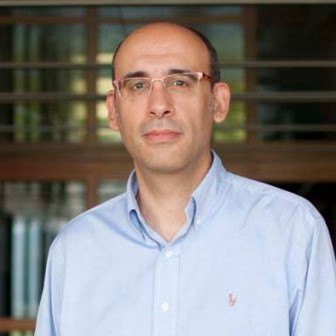
Fernando Pérez González
Principal Investigator

Manuel Fernández Veiga
Researcher

Ana Fernández Vilas
Researcher

Alberto Pedrouzo Ulloa
Researcher
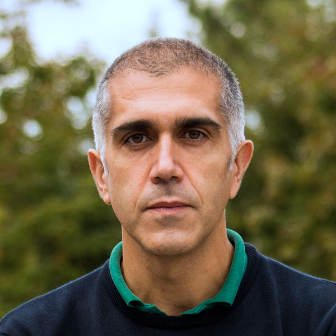
Pedro Comesaña Alfaro
Researcher
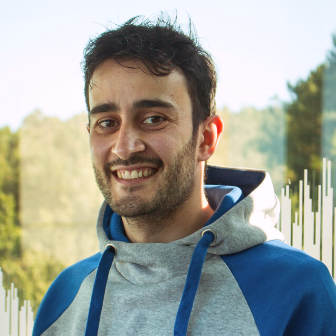
David Vázquez Padín
Researcher
Results
Conference Papers
- M. Rashed, C. García-Rubio, C. Campo, “Studying MQTT malicious traffic: methods and challenges,” en Actas de las X Jornadas Nacionales de Investigación en Ciberseguridad, 2025, pp. 150–156.
- M. Moure-Garrido, C. Campo, y C. García-Rubio, “Fingerprinting Encrypted DNS: Exploiting Metadata Leakage in DNS over QUIC,” en Proceedings of the 21st International Symposium on Performance Evaluation of Wireless Ad Hoc, Sensor and Ubiquitous Networks (PE-WASUN), Barcelona, España, oct. 2025. DOI: 10.1109/MSWiM67937.2025.11309217
- A. Jimenez-Berenguel, C. Campo, y M. Moure-Garrido, “Enhancing Privacy in DNS Communications with Energy-Aware Methodologies,” en Proceedings of the 27th International Conference on Modeling, Analysis and Simulation of Wireless and Mobile Systems (MSWiM) PhD Forum, Barcelona, España, oct. 2025. 10.1109/MSWiM67937.2025.11308995
- J. L. Mejía-Acuña, D. Díaz-Sánchez, F. Almenárez-Mendoza, C. Campo-Vázquez, y C. García-Rubio, “Evaluating Verifiable Data Structures for Trustworthy Environmental and Consumption Credentials,” en Proceedings of the 17th International Conference on Ubiquitous Computing and Ambient Intelligence (UCAmI), nov. 2025.
- M. Moure-Garrido, S. Anillo-Baeza, C. García-Rubio, y C. Campo, “DoH: A Double-Edged Sword for Privacy? Unmasking Hidden Traffic Patterns with Machine Learning,” en Proceedings of the 17th International Conference on Ubiquitous Computing and Ambient Intelligence (UCAmI), nov. 2025.
- J. Gento Suela, J. Blanco-Romero, F. Almenárez Mendoza, D. Díaz Sánchez, «Implementing and Evaluating Post-Quantum DNSSEC in CoreDNS», en Proceedings of the 21st International Symposium on Performance Evaluation of Wireless Ad Hoc, Sensor and Ubiquitous Networks (PE-WASUN), Barcelona, España, oct. 2025. 10.1109/MSWiM67937.2025.11308970
- J. Blanco-Romero, Y. García Niño, F. Almenares Mendoza, D. Díaz-Sánchez, C. García Rubio, C. Campo, «Post-Quantum Entropy as a Service for Embedded Systems», en Proceedings of the 17th International Conference on Ubiquitous Computing and Ambient Intelligence (UCAmI), nov. 2025.
- Alberto Bazán Guillén, Pablo A. Barbecho Bautista, Mónica Aguilar Igartua, «RUTGe: Realistic Urban Traffic Generator for urban environments using Deep Reinforcement Learning and SUMO simulator», 11th International Conference on Vehicle Technology and Intelligent Transport Systems (VEHITS 2025), pp 557-564, DOI:10.5220/0013375000003941 Porto, Portugal. April 2nd – 4th, 2025. CORE-C.
- Ana Laura Pérez Méndez, René Monteagudo Gordillo, Carlos Alberto Bazan Prieto, Alberto Bazán Guillén, Rafael E. Bello Pérez and Mónica Aguilar Igartua, » Artificial Intelligence Methods for Anomaly Detection in Energy Consumption», 21st IEEE International Symposium on Performance Evaluation of Wireless Ad Hoc, Sensor, and Ubiquitous Networks (PE-WASUN 2025), Barcelona, Spain. October 26th – 31st, 2025. CORE-C. 10.1109/MSWiM67937.2025.11308730
- Alberto Bazán-Guillén, Pablo Barbecho-Bautista, Mónica Aguilar Igartua, Francesca Cuomo, «Comparing Optimal and Adaptive EV Charging in Smart Cities: MILP vs. Reinforcement Learning», 21st IEEE International Symposium on Performance Evaluation of Wireless Ad Hoc, Sensor, and Ubiquitous Networks (PE-WASUN 2025), Barcelona, Spain. October 26th – 31st, 2025. CORE-C. 10.1109/MSWiM67937.2025.11308997
- Agneev Guin, Alberto Bazán Guillén, Prashanth Kannan and Mónica Aguilar Igartua, «Simulation under Stress: A Comparative Benchmarking of Large-Scale Traffic Simulators», 21st IEEE International Symposium on Performance Evaluation of Wireless Ad Hoc, Sensor, and Ubiquitous Networks (PE-WASUN 2025), Barcelona, Spain. October 26th – 31st, 2025. CORE-C. 10.1109/MSWiM67937.2025.11309008
- Juan Pablo Pérez Vargas, Jorge Geovanny Zhangallimbay Coraizaca, Alberto Bazán-Guillén, Pablo Barbecho Bautista, Mónica Aguilar Igartua, «Gap-Fuzzy Adaptive Signal Control: Enhancing Urban Traffic Efficiency», 21st IEEE International Symposium on Performance Evaluation of Wireless Ad Hoc, Sensor, and Ubiquitous Networks (PE-WASUN 2025), Barcelona, Spain. October 26th – 31st, 2025. CORE-C. 10.1109/MSWiM67937.2025.11308772
- Agneev Guin, Mónica Aguilar Igartua, «An AI-based Intelligent Vehicle Routing approach for Large-scale Fleet optimization», 27th IEEE International Conference on Modeling, Analysis and Simulation of Wireless and Mobile Systems. (MSWiM 2025), Barcelona, Spain. October 26th – 31st, 2025. CORE-A. 10.1109/MSWiM67937.2025.11308747
- Yaqoob Al-Zuhairi, Aya Maher, Alberto Bazán, Mónica Aguilar Igartua, «Federated Learning-Based Electric Vehicle Energy Consumption Prediction and Charging Station Recommendation», 27th IEEE International Conference on Modeling, Analysis and Simulation of Wireless and Mobile Systems. (MSWiM 2025), Barcelona, Spain. October 26th – 31st, 2025. CORE-A. 10.1109/MSWiM67937.2025.11309129
- Argenis Andrade, Leticia Lemus Cárdenas, Juan Pablo Astudillo León, Manuel Eugenio Morocho-Cayamcela and Luis J. de la Cruz Llopis, «Performance evaluation of DQN-Based Reinforcement Learning Congestion Control in Mobile Multi-Hop Wireless Networks», 21st IEEE International Symposium on Performance Evaluation of Wireless Ad Hoc, Sensor, and Ubiquitous Networks (PE-WASUN 2025), Barcelona, Spain. October 26th – 31st, 2025. CORE-C. 10.1109/MSWiM67937.2025.11308763
- Zari, O., Xu, C., Parra-Arnau, J., Ünsal, A, Önen, M. (2024): Link inference attacks in vertical federated graph learning. In: Annual Computer Security Applications Conference (ACSAC), Hawaii, USA, Dec., pp. 761-777. DOI. CORE: A. DOI: 10.1109/ACSAC63791.2024.00068
- Xavier Martínez-Luaña, Manuel Fernández-Veiga and Rebeca P. Díaz-Redondo. “Privacy-aware Berrut Approximated Coded Computing applied to Federated Learning”. JNIC’25
- D. Cajaraville-Aboy, Ana Fernández-Vilas, R. P. Díaz-Redondo, M. Fernández-Veiga. «Decentralized Orchestration Framework for Distributed AI Deployments under Fluid Computing Environments». PE-WASUN’25. DOI: 10.1109/MSWiM67937.2025.11308919
- Álvaro Vázquez, M. Fernández-Veiga, C. Giraldo. «Diffusion-based Solver for CNF Placement on the Cloud-Continuum». PE-WASUN’25, arXiv: 2511.01343 DOI: 10.1109/MSWiM67937.2025.11309048
- Alfonso Camblor, M. Fernández-Veiga. «A Zero-Trust Architecture for Private Collective Forecasting». IEEE CSR’26, Lisboa.
- M Lange, P Guerra-Balboa, J Parra-Arnau, T Strufe. “Balancing Privacy and Utility in Correlated Data: A Study of Bayesian Differential Privacy” International Conference on Very Large Data Bases (VLDB) 18 (11), 4090-4103, 2025.
- O Zari, C Xu, J Parra-Arnau, A Ünsal, M Önen. “Link inferences attacks in vertical federated graph learning”. 2024 Annual Computer Security Applications Conference (ACSAC), 2024.
- O Zari, J Parra-Arnau, A Ünsal, M Önen. “Node injection link stealing attack”. International Conference on Privacy in Statistical Databases, 358-373
- D. Díaz-Sanchez, F. Almenárez-Mendoza, C. Campo-Vázquez, C. García-Rubio, and J. Blanco-Romero, “Next-Generation DNS Data Integrity: Compact Proofs and Long-Term Auditability for IoT and Distributed Cloud Networks”, en Proceedings of the 17th International Conference on Ubiquitous Computing and Ambient Intelligence (UCAmI), nov. 2025, DOI: 10.1007/978-3-032-16995-2_36
- Gil, C.; Parra-Arnau, J.; Forne, J., “Privacidad online: evaluando la incertidumbre del adversario en técnicas de perturbación de perfiles”, RECSI 2026 – XIX Reunión Española sobre Criptología y Seguridad de la Información (2026), La Laguna (Tenerife), Spain.
- Rubio-Jornet, V.; Forne, J.; Parra-Arnau, J., “Análisis de mecanismos de privacidad basados en la perturbación de los enlaces en grafos”, RECSI 2026 – XIX Reunión Española sobre Criptología y Seguridad de la Información (2026), La Laguna (Tenerife), Spain.
- Miranda-Pascual, À., Parra-Arnau, J., Strufe, T. (2026): The adverse effects of omitting records in differential privacy: how sampling and suppression degrade the privacy–utility tradeoff. In: 35th USENIX Security Symposium, Baltimore, USA. CORE A+.
- Patricia Guerra-Balboa, Martin Lange, Javier Parra-Arnau and Thorsten Strufe, “DP to BDP: Noise Recalibration for Correlation-Resilient Privacy Guarantees”, RECSI 2026 – XIX Reunión Española sobre Criptología y Seguridad de la Información (2026), La Laguna (Tenerife), Spain.Àlex Miranda-Pascual, Javier Parra Arnau and Thorsten Strufe, “Hacia nuevas formas de componer aleatoriamente en privacidad diferencial”, RECSI 2026 – XIX Reunión Española sobre Criptología y Seguridad de la Información (2026), La Laguna (Tenerife), Spain.
- Díaz-Sánchez, D.; Almenares, F.; García-Rubio, V. Integridad y auditoría para DNS: auditabilidad a largo plazo para IoT y redes distribuidas, RECSI 2026 – XIX Reunión Española sobre Criptología y Seguridad de la Información (2026), La Laguna (Tenerife), Spain.
- Jimenez-Berenguel, A.; Moure-Garrido, M.; Campo C.; García-Rubio, C. Evaluation of DNS Traffic Obfuscation Strategies for Defending Against Mobile User Profiling. JNIC 2026 – XI Jornadas Nacionales de Investigación en Ciberseguridad (2026), Barcelona, Spain.
Journal Papers
- Jiménez-Berenguel, C. Gil, C. García-Rubio, J. Forné, y C. Campo, “DNS Query Forgery: A Client-Side Defense Against Mobile App Traffic Profiling,” IEEE Access, 2025, doi: 10.1109/ACCESS.2025.3633695
- J. D. Llano-Miraval, C. Campo, C. García-Rubio, y M. Moure-Garrido, “AI Versus IoT Security: Fingerprinting and Defenses Against TLS Handshake-Based IoT Device Classification,” IEEE Access, vol. 13, pp. 165607–165622, 2025, doi: 10.1109/ACCESS.2025.3611160
- M. Rashed, I. T.-D. Viso, y A. I. González-Tablas, “A Comparison of Cyber Intelligence Platforms in the Context of IoT Devices and Smart Homes,” Electronics, vol. 14, no. 22, art. no. 4503, 2025, doi: 10.3390/electronics14224503
- D. Díaz-Sánchez, F. Almenárez, C. Campo, C. García-Rubio, y S. Sherratt, “Beyond PKI: A DNSSEC Delegation Approach for Scalable Dynamic Credential Management in IoT,” IEEE Internet of Things Journal, vol. 12, no. 21, pp. 45663–45679, Nov. 2025, doi: 10.1109/JIOT.2025.3600371
- D. Díaz-Sánchez, F. Almenárez-Mendoza, C. Campo-Vázquez, y C. García-Rubio, “Zero-trust token authorization with trapdoor hashes for scalable distributed firewalls,” Future Generation Computer Systems, vol. 176, art. no. 108227, 2026, doi: 10.1016/j.future.2025.108227
- Alberto Bazán-Guillén, Carlos Beis-Penedo, Diego Cajaraville-Aboy, Pablo Barbecho-Bautista, Rebeca P. Díaz-Redondo, Luis J. de la Cruz Llopis, Ana Fernández-Vilas, Mónica Aguilar Igartua, Manuel Fernández-Veiga, «Realistic Urban Traffic Generator using Decentralized Federated Learning for the SUMO simulator», IEEE Open Journal of the Communications Society, ISSN: 2644-125X, 8th August 2025, (IF 2024 = 6.1; 23/120; Telecommunications; Q1), DOI: 10.1109/OJCOMS.2025.3597019
- Yaqoob Al-Zuhairi, Prashanth Kannan, Alberto Bazán Guillén, Luis J. de la Cruz Llopis, Mónica Aguilar Igartua, «Efficient Charging Station Selection for Minimizing Total Travel Time of Electric Vehicles», Future Internet, ISSN: 2644-125X, 18th August 2025, (IF 2024 = 3.6; 93/258; Computer Science, Information Systems; Q2), DOI: 10.3390/fi17080374
- Gerard Caravaca Ibáñez, Luis J. de la Cruz Llopis, Adrián Catalín Diaconeasa, Alberto Bazán Guillén, Mónica Aguilar Igartua, «MobilitApp: A Deep Learning-Based Tool for Transport Mode Detection to Support Sustainable Urban Mobility», IEEE Access, ISSN: 2169-3536, 13th April 2025, (IF 2024 = 3.6; 50/120; Telecommunications; Q2), DOI: 10.1109/ACCESS.2025.3561238
- Antoni Mínguez, Volkan Tozan, Monica El-Assaad, Silvia Solà-Muñoz, Youcef Azeli, Luis J. de la Cruz Llopis, Xavier Jiménez-Fàbrega, Carles Galup, Raimon Dalmau, Mónica Aguilar Igartua, «Design of a SUMO-based simulator for optimal location of emergency vehicles in the Emergency Medical Systems», Emergency Medicine International, ISSN: 2090-2840, 4823481, pp. 1-26, February 2025, (IF 2024 = 0.8; 39/56; Emergency Medicine; Q3), DOI: 10.1155/emmi/4823481
- Tobar Nicolau, A., Parra-Arnau, J.*, Forné, J., Torra, V. (2025): Uncoordinated syntactic privacy: a new metric for multiple, independent data publishing. In: IEEE Transactions on Information Forensics and Security, vol. 20, pp. 3362-3373, IF (2024): 8.0; 12/147, D1 (computer science, theory & methods). DOI: 10.1109/TIFS.2025.3551645
- Pablo Fernández-Piñeiro, M. Fernández-Veiga, R.P., Díaz-Redondo, A. Fernández-Vilas, M. González-Soto. “Towards efficient compression and communication for prototype-based decentralized learning”. Applied Soft computing, 2025. DOI: 10.1016/j.asoc.2025.113270. Also in arXiv: 2411.09267
- X. Martínez Luaña, Manuel Fernández-Veiga, Rebeca P. Díaz-Redondo. “Privacy-aware Berrut Approximated Coded Computing for Federated Learning”. J. Network and Computer Applications, 2025. DOI: 10.1016/j.jnca.2025.104280
- Diego Cajaraville-Aboy, Ana Fernández-Vilas, Rebeca Díaz-Redondo, Manuel Fernández-Veiga. “Byzantine-Robust Aggregation for Securing Decentralized Federated Learning”. IEEE Access, 2025. DOI: 10.1109/ACCESS.2025.3629864
- Martín González-Soto, Bruno Fernández-Castro, Rebeca P. Díaz-Redondo, M. Fernández-Veiga. “IC4Net: Decentralized Communication for Continual Multi-Agent Learning”. IEEE Access, 2025. DOI: 0.1109/ACCESS.2025.3631242
- C. Beis-Penedo, R. P. Díaz-Redondo, A. Fernández-Vilas, M. Fernández-Veiga. “A Blockchain Solution for Decentralized Training in Machine Learning for IoT”. Computer Communications, 2025. DOI: 10.1016/j.comcom.2025.108289
- Diego Cajaraville-Aboy, Marta Moure-Garrido, Carlos Beis-Penedo, Carlos Garcia-Rubio, Rebeca P. Díaz-Redondo, Celeste Campo, Ana Fernández-Vilas, and Manuel Fernández-Veiga. «CO-DEFEND: Continuous Decentralized Federated Learning for Secure DoH-Based Threat Detection». Computer Networks, 2025. arXiv: arXiv: 2504.01882 DOI: 10.1016/j.comnet.2025.111961
- C. Beis-Penedo, Rebeca P. Díaz-Redondo, A. Fernández-Vilas, M. Fernández-Veiga. «HLF-FSL: A Decentralized Federated Split Learning Solution for IoT on Hyperledger Fabric». Array, 2026. DOI: 10.1016/j.array.2026.100685
- Álvaro Rodríguez-Vázquez, Carlos Giraldo, M. Fernández-Veiga. «CNFP: Optimizing Cloud-Native Network Function Placement with Diffusion Models on the Cloud Continuum». Computer Networks, 2026. DOI: 10.1016/j.comnet.2026.112321
- Diego Cajaraville-Aboy, Ana Fernández-Vilas, Rebeca P. Díaz-Redondo, Manuel Fernández-Veiga, PhD; Pablo Picallo-López. «Decentralized Orchestration Architecture for Fluid Computing: A Secure Distributed AI Use Case». Computer Networks, 2026.
- S Hanisch, P Arias-Cabarcos, J Parra-Arnau, T Strufe. “Anonymization techniques for behavioral biometric data: a survey”. ACM Computing Surveys 57 (11), 1-54, 2025. DOI: 10.1145/3729418
- C Gil, J Parra-Arnau, J Forné. “Privacy protection against user profiling through optimal data generalization”. Computers & Security 148, 104178, 2025. DOI: a href=»https://doi.org/10.1016/j.cose.2024.104178″>10.1016/j.cose.2024.104178
- Moure-Garrido, M.; Garcia-Rubio, C.; Campo, C. Unveiling Hidden Patterns: Self-Similarity and Entropy for Robust Encrypted DNS Traffic Security. Journal of Network and Systems Management 34, 90 (2026). DOI: 10.1007/s10922-026-10069-y
- Blanco-Romero, J.; García-Niño, Y.M.; Mendoza, F.A.; Díaz-Sánchez, D.; García-Rubio, C.; Campo, C. Post-Quantum Entropy as a Service for Embedded Systems. Sensors 26, 2737 (2026). DOI: 10.3390/s26092737
- Agneev Guin, Alberto Bazán-Guillén, Prashanth Kannan, Junjun Lu, Marcos Postigo-Boix. “Modeling and benchmarking two-wheeler seepage behavior in dense mixed traffic simulations”. Computer Networks, Volume 287, 2026, 112510, DOI: 10.1016/j.comnet.2026.112510
- Junjun Lu, Marcos Postigo-Boix, Alberto Bazán Guillén, Luis J. de la Cruz Llopis, Mónica Aguilar Igartua. “FedCAMO: Federated Learning Carbon-Aware Multi-Objective Client Selection”. Computer Networks, Volume 286, 2026, 112486. DOI: 10.1016/j.comnet.2026.112486
- Junjun Lu, Marcos Postigo Boix, Alberto Bazán Guillén, Luis J. de la Cruz Llopis, Mónica Aguilar Igartua. “FedITS-tool: A lockstep co-simulation framework for vehicular federated learning with per-round energy and carbon accounting. “ SoftwareX, Volume 35, 2026, 102857. DOI: 10.1016/j.softx.2026.102857
- Bazán-Guillén, A., Rubio-Jornet Víctor, Igartua Mónica Aguilar, Joaquim, M., Pinyol Marta, V. i., & Casadevall Albert, M. i. (2026). “MobiCugat: City-scale traffic assessment using low-emission zone camera data”. Smart Cities, 9(6), 95. DOI: 10.3390/smartcities9060095
- Juan Pablo Astudillo León, Luis J. de la Cruz Llopis, Mónica Aguilar Igartua. “Data Privacy Analysis for ML-Based Congestion Control in Multi-Hop Wireless Networks”. IEEE Access, 14, 2026. DOI: 10.1109/ACCESS.2026.3701821
- J. P. A. León, L. L. Cãrdenas, L. J. de la Cruz Llopis and M. Aguilar Igartua, «Deployment-Aware Multi-Objective Optimization of Machine Learning Models for Predictive Congestion Control in Multi-Hop Vehicular Networks,» in IEEE Access, vol. 14, pp. 115366-115385, 2026, DOI: 10.1109/ACCESS.2026.3717251
- Marta Moure-Garrido, Carlos Garcia-Rubio, Celeste Campo. “The persistent vulnerability: Characterizing metadata leakage in DNS over QUIC”. Computer Networks, Volume 286, 2026, 112464, DOI: 10.1016/j.comnet.2026.112464
- V. Rubio-Jornet, J. Parra-Arnau and J. Forné, «On the Adaptation of Trajectory Generative Models to Enforce Differential Privacy Through Gradient Perturbation,» in IEEE Access, vol. 14, pp. 134654-134668, 2026, DOI: 10.1109/ACCESS.2026.3728159
News


Contact

Escola de enxeñería de telecomunicación
UVigo
- iclab@uvigo.gal
- +34 986813868
- Rúa Maxwell, s/n, 36310 Vigo